
How Crude Oil Becomes Reserves: From Source to Storage
Did you know that the oil we use every day has a journey that spans millions of years? It’s a story etched in the very rocks beneath our feet, a testament to the powerful forces of nature. In fact, it’s estimated that the Earth has approximately 1.7 trillion barrels of proven oil reserves as of 2022 (U.S. Energy Information Administration). But how does this ancient, viscous liquid transform from a geological phenomenon into what we call ‘reserves,’ ready for extraction and use?
Understanding the journey and transformation of oil is essential in grasping how crude oil becomes reserves: from source to storage.
The transformation of crude oil from its subterranean origins into economically viable reserves is a complex, multi-stage process. It involves a deep understanding of geology, advanced technology, significant financial investment, and rigorous scientific assessment. It’s not just about finding oil; it’s about proving it can be profitably extracted and quantifying its volume. Let’s dive deep into this fascinating process.
The Genesis of Oil: Millions of Years in the Making
Understanding How Crude Oil Becomes Reserves: From Source to Storage
Before oil can become a reserve, it must first be formed. This is a geological saga that began hundreds of millions of years ago during the Mesozoic and Paleozoic eras. The process is remarkably consistent, requiring a specific set of ingredients and conditions:
1. Organic Matter Accumulation
The foundation of all oil and natural gas is organic matter. This typically includes the remains of tiny marine organisms like plankton, algae, and bacteria. When these organisms died, they sank to the bottom of ancient seas, lakes, and oceans. Instead of decomposing completely, they became buried under layers of sediment – mud, sand, and silt.
2. Burial and Maturation
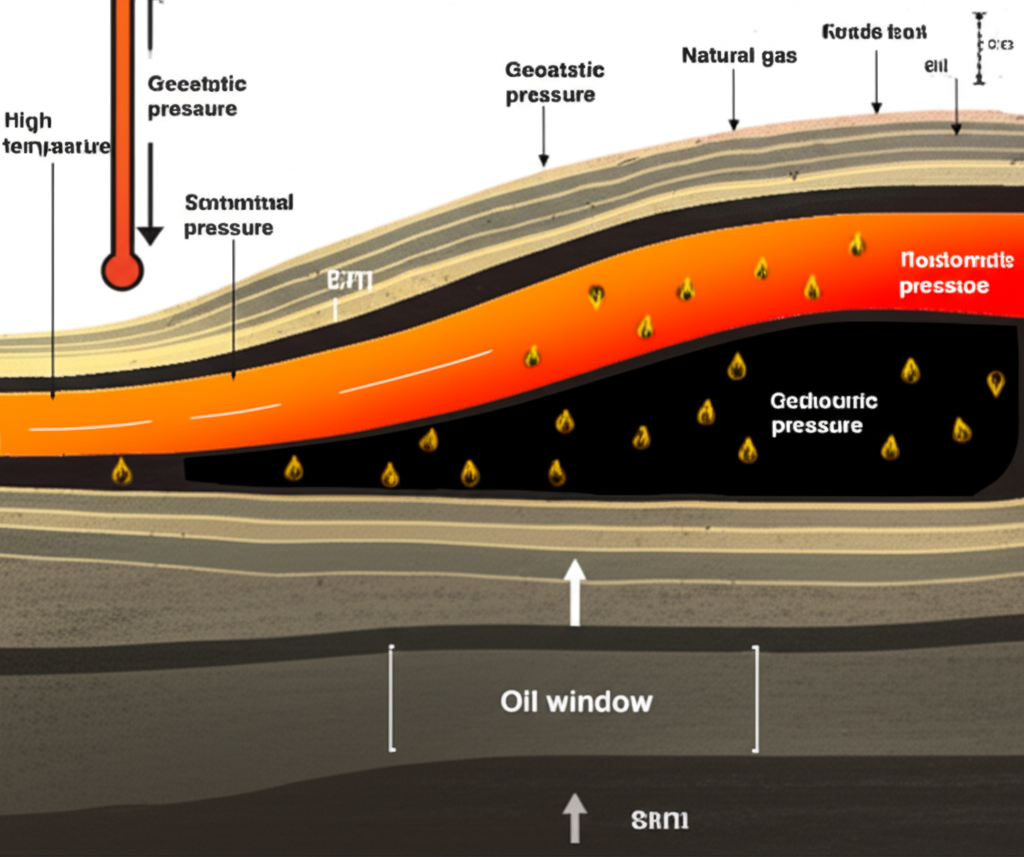
As more sediment accumulated, the organic-rich layers were buried deeper and deeper. This burial subjected the organic matter to immense pressure and heat. Over millions of years, these conditions, often referred to as the ‘oil window,’ caused the complex organic molecules (like kerogen) to break down and transform into simpler hydrocarbon compounds – the building blocks of crude oil and natural gas. The specific temperature and pressure conditions determine whether oil, natural gas, or a mixture of both is formed.
3. Migration
Once formed, oil and gas are less dense than the surrounding rock and water. This buoyancy causes them to migrate upwards through porous rock layers. However, this upward journey is often interrupted by impermeable rock layers, known as caprocks. These caprocks act as seals, trapping the migrating hydrocarbons in porous and permeable rock formations below.
4. Trapping
The geological structures that trap oil and gas are crucial. These traps can take various forms, including:
- Anticlines: Upward-arching folds in rock layers where oil and gas can accumulate at the crest.
- Faults: Fractures in the Earth’s crust where impermeable rock layers are brought into contact with porous reservoir rocks, blocking the upward migration of hydrocarbons.
- Stratigraphic Traps: Formations where porous reservoir rock is pinch-out or sealed by impermeable rock layers.
These traps are the geological ‘containers’ where oil and gas accumulate over geological timescales, creating what geologists call petroleum systems.
The Quest for Oil: Exploration and Discovery
Finding these hidden underground reservoirs is a sophisticated and expensive endeavor. Exploration geologists and geophysicists use a variety of techniques to identify potential oil-bearing formations:
1. Geological Surveys
Geologists study rock formations on the surface and in outcrops to understand the underlying geology. They look for evidence of ancient seas, sedimentary basins, and potential trapping structures.
2. Seismic Surveys
This is one of the most critical tools in oil exploration. Seismic surveys involve generating sound waves (using sources like air guns at sea or vibrator trucks on land) that travel through the Earth’s crust. These waves bounce off different rock layers and are detected by sensitive receivers (geophones or hydrophones). By analyzing the travel times and patterns of these reflected waves, geophysicists can create detailed 3D maps of the subsurface, revealing potential traps and reservoir rocks.
- A 2021 report indicated that global seismic acquisition spending was projected to reach $5.8 billion, highlighting the significant investment in this technology. (IHS Markit)
3. Gravity and Magnetic Surveys
These methods measure subtle variations in the Earth’s gravitational and magnetic fields, which can indicate the presence of different rock types and geological structures that might conceal oil deposits.
4. Well Logging and Core Sampling
Once a promising location is identified, exploratory wells are drilled. These wells are crucial for directly assessing the subsurface. Well logging involves lowering instruments into the borehole to measure the physical properties of the rocks and fluids, such as porosity, permeability, and the presence of hydrocarbons. Core samples – solid cylindrical pieces of rock – are extracted from the wellbore and brought to the surface for detailed laboratory analysis. These samples provide direct evidence of the rock type, its properties, and the presence and type of hydrocarbons.
Defining Reserves: From Discovery to Classification


Discovering oil is only the first step. To be classified as reserves, the discovered oil must meet stringent criteria, primarily related to its economic viability and technical recoverability.
1. Proved Reserves
This is the most important category. Proved reserves are quantities of petroleum which, by analysis of geological and engineering data, can be estimated with reasonable certainty to be recoverable in the future from known reservoirs under existing economic and operating conditions. The key elements here are:
- Known Reservoirs: The presence of oil in a specific geological formation has been confirmed through drilling.
- Reasonable Certainty: This implies a high degree of confidence, often based on statistical methods and extensive data. The Society of Petroleum Engineers (SPE) and the World Petroleum Council (WPC) define this as a probability of recovery of at least 90%.
- Existing Economic Conditions: The price of oil must be high enough to justify the cost of extraction and production. If oil prices fall too low, reserves that were previously considered viable might be reclassified as ‘resources’ or become uneconomic.
- Existing Operating Conditions: This refers to the current technology and production methods that are feasible and economical to use. New technologies or improved recovery techniques can sometimes upgrade resources to reserves.
2. Probable and Possible Reserves
Beyond proved reserves, there are other classifications that reflect increasing levels of uncertainty:
- Probable Reserves: Quantities that are less certain than proved reserves. There is a greater risk of recovery, with a probability of at least 50%.
- Possible Reserves: These are the least certain, with a probability of recovery of at least 10%.
These categories are important for companies and governments in assessing potential future production and resource potential.
The Journey to Production: Extraction and Recovery
Once a discovery is confirmed and deemed to be economically viable, the focus shifts to extracting the oil. This involves a series of engineering challenges and technological advancements.
1. Drilling and Well Completion
Development drilling begins to access the reservoir. Wells are drilled and then completed – a process that involves installing casing, cementing it in place, and perforating the casing at the level of the oil-bearing formation. Production tubing is then run inside the casing to bring the oil to the surface.
2. Primary Recovery
This is the initial phase of production, relying on the natural pressure within the reservoir. This pressure can be due to dissolved gas, an underlying water drive, or the expansion of a gas cap. Primary recovery typically extracts only about 5-15% of the original oil in place (OIP).
3. Secondary Recovery
When natural reservoir pressure declines, secondary recovery methods are employed. The most common method is waterflooding, where water is injected into the reservoir to maintain pressure and push the oil towards production wells. Gas injection (injecting natural gas or other gases) is another common secondary recovery technique.
- Secondary recovery can typically recover an additional 15-30% of the OIP.
4. Tertiary Recovery (Enhanced Oil Recovery – EOR)
Even after secondary recovery methods become less efficient, a significant amount of oil often remains trapped in the rock pores. Tertiary or Enhanced Oil Recovery (EOR) techniques are used to extract this remaining oil. These methods are more complex and costly but can significantly increase overall recovery rates.
Common EOR techniques include:
- Thermal Methods: Involve injecting steam or using in-situ combustion to heat the oil, reducing its viscosity and making it easier to flow. This is particularly effective for heavy oil.
- Gas Injection Methods: Injecting gases like carbon dioxide (CO2) or nitrogen, which can mix with the oil and reduce its viscosity or swell the oil, making it more mobile.
- Chemical Flooding: Injecting polymers, surfactants, or alkalis into the reservoir to alter the properties of the oil or the water, improving the displacement of oil from the rock.
EOR methods can potentially recover an additional 5-15% or more of the OIP, bringing the total recovery factor for a well-managed reservoir to potentially 30-60% or even higher in some exceptional cases.
The Role of Technology and Innovation


The ability to identify, extract, and quantify oil reserves is constantly evolving thanks to technological advancements. Innovations in seismic imaging, drilling technology (like horizontal drilling and hydraulic fracturing), reservoir modeling, and EOR techniques are crucial for maximizing recovery and making previously uneconomic resources viable.
- Hydraulic fracturing, often combined with horizontal drilling, has been a key driver in unlocking unconventional oil resources, significantly boosting production in regions like the U.S.
Reserves vs. Resources: A Crucial Distinction
It’s important to distinguish between reserves and resources. While often used interchangeably in casual conversation, in the oil and gas industry, they have distinct meanings:
- Resources: Encompass all oil and gas that exists in the Earth’s crust, whether discovered or undiscovered, recoverable or unrecoverable. This is a much broader category.
- Reserves: Are a subset of discovered resources that are currently economically and technically recoverable.
Think of it this way: resources are all the potential oil out there. Reserves are the portion of those resources that we are reasonably certain we can get out of the ground and sell profitably today.
Factors Influencing Reserve Classification
Several dynamic factors can influence whether discovered oil is classified as reserves:
- Oil Prices: As mentioned, higher oil prices can make previously uneconomic wells profitable to produce, thus increasing reserves. Conversely, low prices can lead to reserve write-downs.
- Technology: Advances in drilling, extraction, and EOR techniques can unlock previously inaccessible oil, converting resources into reserves.
- Geopolitical Stability: Political instability in oil-producing regions can impact production and investment, potentially affecting reserve estimates.
- Environmental Regulations: Stricter environmental regulations can increase the cost of production or limit certain extraction methods, potentially impacting the economic viability of some reserves.
Global Distribution of Oil Reserves


Oil reserves are not evenly distributed across the globe. The Middle East holds the largest share of proven oil reserves, followed by North and South America, and Eurasia. Countries like Venezuela, Saudi Arabia, and Canada are consistently ranked among the top holders of proven oil reserves.
- As of 2022, Venezuela held the largest proven oil reserves globally, estimated at over 300 billion barrels, largely due to its vast heavy oil deposits. (OPEC Annual Statistical Bulletin)
Conclusion: A Vital, Evolving Asset
The journey of oil from ancient organic matter to quantifiable reserves is a remarkable interplay of geological processes, human ingenuity, and economic realities. It’s a continuous cycle of exploration, assessment, and extraction, driven by global energy demand. Understanding how oil becomes reserves is not just an academic exercise; it’s fundamental to comprehending global energy markets, geopolitical dynamics, and the future of energy production. As technology advances and economic conditions shift, the definition and volume of what constitutes ‘oil reserves’ will continue to evolve, shaping our energy landscape for decades to come.
Frequently Asked Questions (FAQs)
1. What is the difference between oil and natural gas reserves?
Both oil and natural gas form through similar geological processes. Oil reserves refer to recoverable quantities of crude oil, a liquid hydrocarbon. Natural gas reserves refer to recoverable quantities of natural gas, which is primarily methane and other lighter hydrocarbon gases. While often found together, they are classified and managed separately due to their different physical properties and market uses.
2. How are oil reserves measured?
Oil reserves are measured in barrels. A standard barrel of oil is equivalent to 42 U.S. gallons. Reserve estimates are typically reported in millions or billions of barrels.
3. Can oil reserves be depleted?
Yes, oil reserves are finite resources. As oil is extracted and produced, the amount of recoverable oil in a reservoir decreases. Reserves are constantly being re-evaluated based on production rates, new discoveries, and changes in economic and technological factors. The U.S. Geological Survey (USGS) estimates the world’s undiscovered oil resources to be substantial, but eventually, all reserves will be depleted.
4. What is the role of the organization SPE in defining reserves?
The Society of Petroleum Engineers (SPE), along with the World Petroleum Council (WPC) and the American Association of Petroleum Geologists (AAPG), has been instrumental in developing and standardizing the definitions for reserves and resources. Their guidelines, such as the Petroleum Resources Management System (PRMS), provide a framework for classifying reserves based on technical and economic feasibility, ensuring consistency and transparency in reporting.
5. Are ‘proved reserves’ the same as total oil in the ground?
No, proved reserves are only a fraction of the total oil in the ground. They represent the portion that can be extracted with reasonable certainty under current economic and technological conditions. The total oil in the ground includes discovered resources (proved, probable, and possible) as well as undiscovered resources. Typically, only 30-60% of the original oil in place (OIP) is considered recoverable as reserves.
6. How often are oil reserves updated?
Oil reserve estimates are updated regularly, typically on an annual basis, by oil companies and government agencies. This updating process considers factors like production data, new drilling results, changes in oil prices, and advancements in extraction technology. Major revisions can occur following significant new discoveries or the implementation of new recovery techniques.
External Links


- U.S. Energy Information Administration (EIA) – International Energy Statistics: https://www.eia.gov/international/data/ – Provides comprehensive data on global energy reserves, production, and consumption.
- OPEC – Annual Statistical Bulletin: https://www.opec.org/opec_web/en/data_tools/334.htm – Offers detailed statistics on oil reserves and production for OPEC member countries and the world.
- Society of Petroleum Engineers (SPE) – Resources & Reserves Definitions: https://www.spe.org/en/industry-topics/resources-and-reserves/ – Information on industry standards for classifying oil and gas resources and reserves.
- U.S. Geological Survey (USGS) – Energy Resources Program: https://www.usgs.gov/centers/national-and-global-research/energy-resources – Provides scientific assessments of the nation’s and the world’s energy resources.
- International Energy Agency (IEA): https://www.iea.org/ – A leading source for global energy analysis, including data on oil reserves and markets.
- National Energy Technology Laboratory (NETL) – Enhanced Oil Recovery (EOR): https://www.netl.doe.gov/research/oil-and-gas/enhanced-oil-recovery – Details on advanced techniques used to increase oil recovery from existing fields.